

This program is built on the four cycles of a healthy day. It’s a natural energetic cycle that aligns with how our bodies work, based on the endocrine system and more specifically our natural circadian rhythm. In this chapter, we’ll focus on our morning, and the Warm Up cycle of the day.
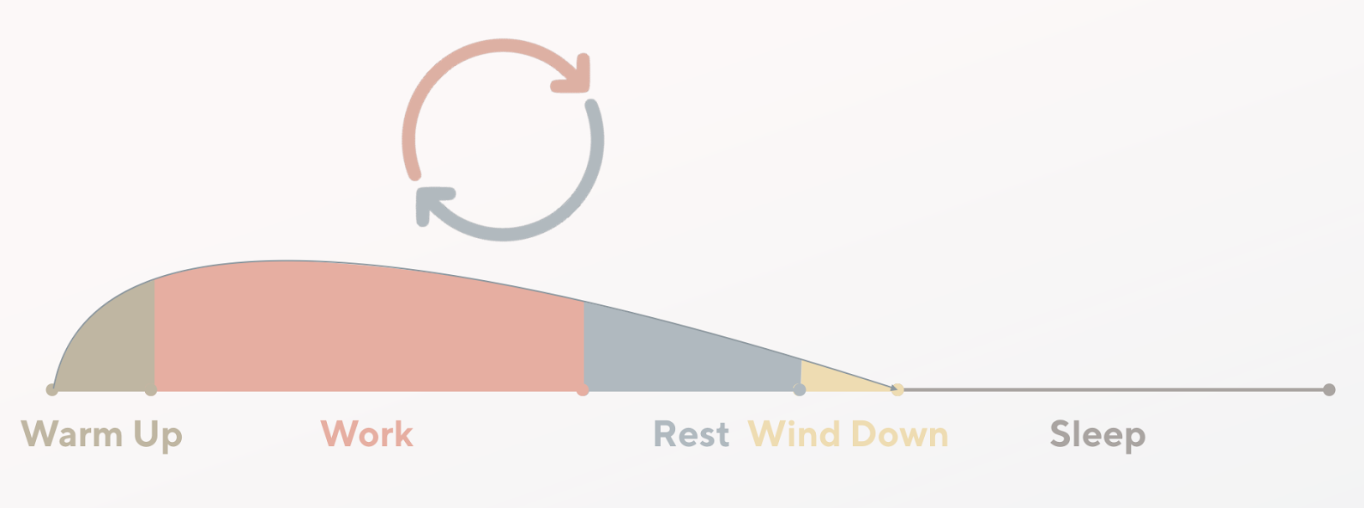
The four cycles are: Warm Up, Activity (Work & Rest), Wind Down and Sleep.
The Four Cycles and the Endocrine System
The endocrine system is a network of glands in the body that produce various hormones that help your body function properly. See the illustration for an overview of the Endocrine System.
I won’t go into too much detail about the entire system as it’s very complex. We’ve included a number of links if you’re interested in reading more online. The two areas of the endocrine system we’ll focus on at this point are the adrenal glands, located above the kidneys and pineal gland, located at the base of the brain. The reason we’ll talk about these two is that they produce two critical hormones that keep us awake and put us to sleep (amongst other functions).
Adrenal Glands
The Adrenal glands produce a number of important hormones such as cortisol (which helps regulate metabolism and helps your body respond to stress) and aldosterone (which helps control blood pressure) as well as adrenaline (which helps your body react to stress).
Cortisol is a critical component of our daily cycle because it helps us stay awake. When we wake up in the morning, our system floods with cortisol which gives us the energy to get through the day. In a natural circumstance, the amount of cortisol will decrease throughout the day so that by nightfall, we can sleep.
Pineal Gland
The pineal gland is a small, mysterious gland that has been referred to as the third eye because of it’s relationship to light. It’s also a focus for many psychedelic researchers, especially around it’s relationship to DMT. That’s not why we’re talking about it now though, we’re talking about because of its relationship to our circadian rhythm – link to what is the circadian rhythm and for its release of the hormone melatonin. Melatonin is the hormone that puts us to sleep, you’ve probably heard of it as a supplement you can take as a sleep aid, but it’s naturally produced in the body. In a healthy functioning system, melatonin rises slowly through the afternoon and into the evening, making us tired and finally helping us fall asleep.
Circadian Rhythm
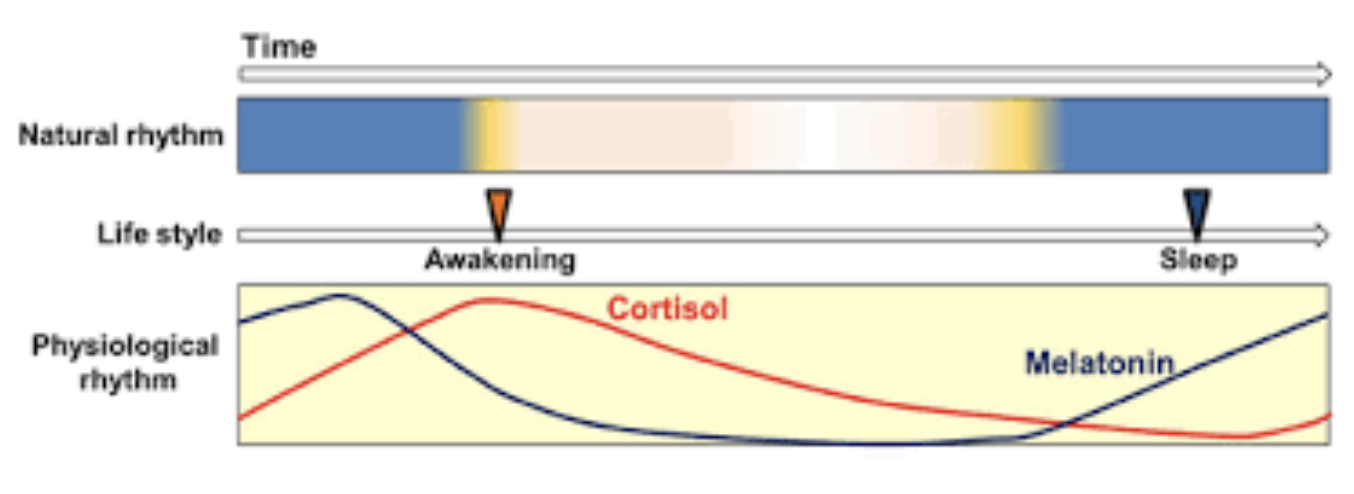
Better graphic. When you look at the rise and fall of Cortisol and Melatonin, they have an inverse relationship. Cortisol rises through the late morning to wake us up and carries us through the day, and Melatonin rises through the evening to prepare us for sleep. This is the natural cycle of our bodies when we’re in a healthy and consistent rhythm.
This rise and fall of Cortisol and Melatonin is what’s described as our Circadian Rhythm. It’s related to the rise and fall of the sun and the rotation of the earth around the sun. When we follow a natural and consistent routine of waking and warming up, work, rest, winding down and sleep, our body is in its natural rhythm and functions optimally. We have energy throughout the day, and we sleep deeply, allowing our bodies and brain to restore themselves effectively citation
. Our immune system runs better, as does our metabolism, along with every other system. However, when we get out of sync with our natural circadian rhythm, perhaps with erratic sleep patterns, working late, too much light exposure from cities and devices, chronic stress or a host of other causes, our brain and bodies perform poorly and illness starts to appear. Much of what this program will focus on is finding a natural rhythm for your work and your life that supports and optimizes your health and ability to perform.
Back to the Four Cycles of the Day
So with that bit of scientific background, I hope the importance of the cycles of the day is beginning to come into focus. Each part of the cycle is a critical component to a productive and healthy day and can’t be passed over without putting your performance and wellness at risk. So often it’s implied that the more we work, the more productive we are. This is simply not true. As long as our brains and bodies are involved, we can’t expect to just wake up and instantly produce at a high calibre and continue non-stop throughout the day. While it may seem more possible when we’re young, overworking and ignoring the natural energy cycles of our body can cause significant damage to our bodies, immune systems and cognitive health long term. In general, observing the four cycles of the day will lead to higher cognitive performance, increased energy, alertness, memory retention, enhanced mood and immune function. You will feel better day to day and increase your longevity by lowering your chances of serious illness later in life.
We’ll be coming back to the Four Cycles of the Day throughout The Program, for now we’re going to focus on the morning cycle, Warm Up. In Chapter Two, Three and Four we get into the Activity Cycle and in Chapter Five we tackle the Wind Down and Sleep cycles. Stay tuned!